Tuesday, August 18, 2009

Editor's Dilemma

So I'm sitting on a bit of a conundrum here.

On the one hand, I really wanted CSD to be an open venue. This was never designed to be a blog that catered to an age group or demographic. I wanted all takers to come in here and partake of all things food. Whether you're a housewife or grad student, consummate professional or occasional home cook, I wanted you to feel welcome. Take in some of what I've learned, and what I'm still learning, and hope that it somehow gets you pumped up to spend a bit more time in your own kitchens.

Now on the other hand, I'm an outspoken fiend with a tendency to be over-the-top with what I write on a page. Anyone who knows me, and anyone who's ever read even a few paragraphs of what I talk about, knows that I'm quite the animated chap. I talk too loud for too long, bouncing between Hunter Thompson-esque hysteria and Henry Rollins-esque aggressiveness. I am, for all intensive purposes, an unapologetic handful.

Stranger still, is the fact that I actually teach this way too. Put me in front of an eager group to learn, and I'm a madman. I will neglect resources designed to make my job easier if I think I can do it better, comment loudly on my displeasure with certain bits of "required curriculum," and find every possible way to cram information that I think is necessary into my students. Even if it means talking for far longer than anyone else of my ilk would, That's what I'll do. And I do it because I want my students to walk away understanding what I teach. Not just the buzz words that appear on the test, but why those things are important in the first place. Understanding means memory retention, people are more likely to remember things if they understand why they're done. But it also means confidence. And confidence is a powerful force when you're learning something.

This blog by it's very design, is an educational resource. A place where I wanted people of all walks of life to come to, read a bit, then wander into their own kitchens excited to create. As such, I've been very neutral in my posts, not wanting to offend anyone who might stumble on to this blog looking for a little culinary amusement. I have sat staring at the screen for many a night, trying to think of new ways to word things so that everyone feels at home. In a sense, I've gotten a bit "textbook" with these first few posts, basically turning everything I write into something you'd find in a cooking book at an elementary school library.

My tension with having to write posts in this neutral state has made it hard to actually write anything. Words tend to come pretty naturally to me (obviously,) but I've really never been one who's had to calculate how I say things. I've been lucky enough to get by without ever having to. And now, putting myself in a position where I have to select my words and rethink everything I would normally right, it just takes the wind out of my sails.

In the end, I just gotta be me.

So, after a very long spell of not writing for CSD, I am back at the helm, this time speaking the only way I know how to speak. The posts from here on out may get a bit cynical, possibly even a trifle snarky, but they will be passionate.

For those of you new newcomers who swing by this page and find my writing a bit strong, please don't be offended. I'm not mad at you, nor am I picking on you. I welcome your presence, your comments, and most importantly, the fact that you want to develop your skills in the kitchen. And hopefully, once you get past the wisecracks and dark attitude, you'll find someone that, much like yourselves, just likes to cook.


-Editor In Chief-

Monday, August 17, 2009

Bare Cuisine: Hotel Room Tortellini & Muffins

One of the ridiculous myths that keep people from entering their kitchens and cooking for themselves is a lack of technology. Their kitchens aren't loaded to the brim with fantastic gadgetry that specializes in the culinary advancement of the unwashed and exhausted. Because surely no one in this country can make bread without a bread machine, nor can they cook rice without a rice cooker. And being unable to afford such things is what keeps us loaded with microwave dinners and pizza rolls, instead of getting some kitchen skill. This is sadly how we think, and despite the fact that modern man got to this point without the help of such niceties, this is apparently not how we roll these days.

So, for those of you who claim that you don't have the proper equipment for making a decent meal, I present to you English comedian George Egg, who managed to make a quality meal without even having a kitchen


This is a hotel room people, there are no hot plates, no microwaves, and no cutting boards. And yet the job still got done. Were the results perfect? Probably not, but the man still managed to create a nice healthy meal without having to fork out big bucks for room service. That right there is a heck of an accomplishment.

So George Egg managed to make dinner in a hotel room with an iron and a kettle, what's keeping you?

Monday, July 20, 2009

Kitchen Mathmatics: Part II

Recently I spoke of the mathematics you’ll need to employ in the kitchen, to better understand how our time will be spent when we cook. It’s not meant to suggest that you’ll have to work really hard or wait for hours on end just to eat something. Fact of the matter is, you need only invest about five minutes of time if the height of your culinary aspiration is a peanut butter sandwich. However on the other side of the spectrum, you could throw that roast into an oven, cook it for five minutes, and then start eating it. I doubt the end result would be safe to eat, and would probably taste pretty gross, but it’s definitely within your means (that said, don’t do it!)

The purpose of our time in the kitchen is twofold:

  • To cook the dish to completion
  • To be pleased with the end result.

Cooking to completion is based completely on personal preference. Take for example, a good old fashioned steak. For those of us who love our cattle cooked medium rare, to completion takes on a different meaning than it does for those who love to burn their stuff to well done. But one thing we can all agree on is that cooked means something more than raw, so let’s just run with that shall we? So, we spend as much time as necessary to cook our food to a pleasing state of doneness.

The second purpose is what will make up the brunt of our kitchen time. A meal can be cooked to completion with very little fuss. Stick a piece of meat and a potato in the microwave and radiate the heck out of it for twenty or so minutes, and things will be cooked through. But I highly doubt that your dining experience will be a pleasurable one. In fact, I’m going to safely say that it’s going to trigger your gag reflex more than anything else.

So we invest more time into our food to make a more satisfying meal. And this can entail anything from chopping up vegetables to picking herbs, to making broths, and everything in between.

So how much time on average can we expect to spend in our kitchen? I would say for anything more intense than a sandwich, expect a minimum of a Rachael Ray-friendly 30 minutes. This counts everything from preparation to sitting down to eat the finished product. This number also assumes that we’re going for optimal quality, since there are ways to cut down this number, but it will be at the expense of taste.

As for the maximum amount of time you can spend in the kitchen, well the sky is the limit. It can be as little as an extra five minutes, or it can even reach into several days for some dishes (like coq au vin for example.) It really boils down to how much time you want to put into your meal. My attitude is that the more time you’re willing to spend on a dish, the better it’s going to be.

Now this doesn’t mean that cooking steaks for two hours straight on high heat will find a new nirvana of tastiness beyond burnt. It’s just going to be a different, more unpleasant, class of burnt. But you can invest more time in preparing good sides, or whipping up marinades for your wonderful steaks, season them early, let them reach room temperature, etc etc. Such things can only make the meal better.

But it’s going to come down to how much time you have available to spend, and your willingness to use it. For me, spending a bit more time to make an average meal special is a better use of my time than catching up on Simpson’s reruns. And I think, with a little know how and a bit of confidence, you’ll find yourself feeling the same way.

Thursday, July 9, 2009

Kitchen Mathmatics

This blog assumes that you’re wanting to deviate away from microwavable dinners, quick heat packages, and canned sludge. It assumes that you’ve lost your taste for fast food and don’t really want to spend your hard-earned cash on eating out. If we are to proceed into this new world of culinary nirvana, we must be armed with new math.

You see, the laws of instant gratification that operate at the drive-thru do not work in the kitchen. Sacrifices of time and energy must be made if you are to make a meal that is good, and good is the key word here. The reason we’re steering clear of microwavables and take-out in the first place is because we want to have something that tastes better than microwaveables and take-out. If tasteless TV dinners suddenly sound more appealing to you than giving up your precious time, this would be a good opportunity to leave. For those who remain undaunted, here are the formulas you need to consider:

  • Time-consuming preparation + quick but intensive cook time = Good food
  • Quick but intensive preparation + time-consuming cook time = Good food

And no, there is no formula for quick preparation and quick cooking that equals good food. The only people who will tell you otherwise are companies that sell processed box dinners or useless kitchen gadgets. And the cost for dealing with any of them will be your hard-earned cash, something I consider self-defeating since one of the purposes of cooking at home is to save you some money. Now, there are plenty of dishes out in the world that have times between 20-30 minutes from start to finish, but typically you'll still see them getting lumped into either of these categories. And of course there are hybrid formulas involving medium preparation and medium cooking, but we’ll get to those another time.

The first formula considers dishes like stir fry, fajitas and burgers, where the brunt of your time is spent getting everything ready. Cook time for such dishes can happen in a matter of minutes, but they also require our constant attention. To abandon our post in favor of a little TV time can be the difference between a well cooked dish and something that’s been burnt to a crisp.

The second formula covers things like soups, stews, and roasts among other things. Cooking the dish can take up to several hours, but it’ll be pretty easy going. You can go catch up on some TV or read a few chapters of a book without having to do much to your dish. And there’s less of a likelihood that you will burn or damage your dish with this method. Of course, the catch is, you’re going to have to wait for the end result, and if you’re starving, then waiting several hours for dinner might not be in the cards. The other catch is while the preperation work isn’t difficult, it’s imperative to get everything right. This means having everything cut, portioned and set to our liking. Once all your ingredients go into the stew, there’s not going to be any chances for second thoughts.

Sounds complicated? It’s not. We just need to understand that creating a quality meal will take time. And it’s oftentimes more time than the fluffy cooks on Food Network are willing to acknowledge (they’ve got a whole team of prep cooks off camera, of course they’re going to say it’s quick and easy.) But it is time well spent, as long as you’re willing to dedicate a little effort and patience to the process.

Monday, July 6, 2009

Enjoying The Art Of Shopping


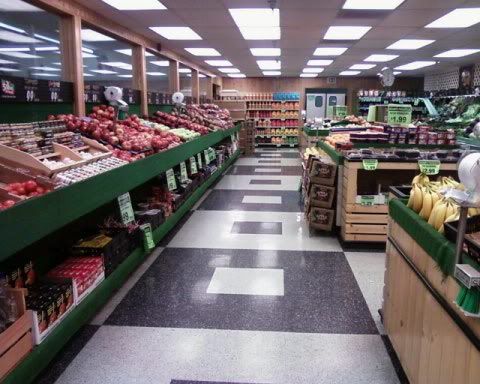
Clean, sparkly kitchens are only part of the equation. The other half is to have food in that kitchen to prepare. And for this, an expedition to a grocery store/local market is necessary. I can speak in great depth about where to shop and where to look (which I'm sure I will later,) but for now, let's discuss getting in the proper grocery shopping mentality.

Many of the avid cooks I know swear that wandering around their local market in search of foodstuffs is every bit as enjoyable as shopping for clothes, gadgets, or anything else that's exciting. And frankly, that's just how it should be. If we can't enjoy the process of buying tasty food, how are we ever going to enjoy the process of cooking it?

The problem is that most trips to the market have become a major pain. Huge lines of people, all tired and grumpy, clogging up the aisles, stripping the shelves of every decent looking thing that's on sale. And despite your best intentions of getting in and out quickly, you end up spending an hour in the store, most of which was spent just waiting in line. And by the time you do get out, you're frustrated, irritable, and would rather go grab a hot burger somewhere then ever endure that evil place again.

We've all been there, and can all agree this is an unpleasant situation that happens more than it should. So, we're gonna need a few tricks in our arsenal to keep the experience of food shopping enjoyable.

STEP 1: SHOP AFTER DINNER

That's right, eat your meal, clean up a little bit, then head for the store. By simply adjusting the time you shop for groceries, you have a number of things working in your favor:

  • There are no lines. Oh sure, the store won't be completely abandoned, but it won't be anything near the chaos of the 5:00 post-work rush when everyone and their pets are hungry. This allows us to take our sweet time picking whatever we want, and lets us get out of the store when we would like to.

  • We're not hungry. This means we're in a far better mood than the aforementioned 5:00 post-work crowd. We're not in a hurry to get home and stuff ourselves before our stomach starts to eat at it's own lining, and thus we can simply enjoy the experience by picking our ingredients in a relaxed fashion. The other advantage of not being hungry is that we're less likely to make that impromptu snack purchase. A person who's full isn't nearly as interested in potato chips and candy bars as a hungry person might be

  • It gets us moving. Our natural temptation after stuffing ourselves to the gills with quality eats is to flop on the couch and lapse into unconsciousness. As you can imagine, this does not sit well with our bodies, who would like you nice and energetic to help break down all those nutrients. Hitting the couch post-dinner affects our metabolism, fat processing, and how we digest food. The healthy thing to do is take a little stroll after your meal. By doing your shopping, you are in fact killing two birds with one stone.

  • The staff is in a better mood. If you frequent the deli, or need help trying to locate certain items, your friendly local grocery store employee is probably going to be a lot nicer after dinner. When 5:00 hits, these poor souls are running around like mad trying to get the huge amounts of people out the door. And your grocery store employee is used to sweating, getting yelled at, and treated like garbage at these times, which means he/she isn't going to be in the most pleasant of states. Once the panic has died down, these dedicated employees tend to be more helpful, more pleasant, and generally make the experience that much better.

  • It gives you a few more culinary options. Even if you don't do anything but throw your meat in a pan with potatoes and cook until brown, it's nice to at least have the option to do more isn't it? If you're wanting to play with marinades, then it's advantageous to be able to do it the night before. And perhaps you can spend the night making sauces or chopping vegetables or other assorted mish-mash. Either way, it means less work for you tomorrow. And speaking of tomorrow....

  • You can go straight home. Since you purchased everything last night, you don't have to fight with the crowds. You can just head home, prepare your meal, and enjoy a bit more of your evening.

STEP 2: KEEP THE SHOPPING LIST MELLOW

Obviously there are things that are must have on your shopping list. Cereals, basic vegetables, and breads are things that pretty much everyone buys, so you definitely want the essentials on your list. But, leave yourself a little room for exploration.

Take meat for example. Making the decision to buy pork chops before you walk into the store doesn't serve us well, because there are a number of factors to consider, like freshness, price, and good old fashioned craving. If you go to the store and find your pork chops looking a little sad and off color, priced 20 cents a pound above the norm, perhaps its time to rethink tomorrow's dinner. And besides, what about making a decision on what looks good? If we're buying stuff that looks really good and sounds like it would make a nice dinner, well then we're going to be that much more excited to cook it. Make tomorrow evening's meal an adventure. Browse through the meat department and let your creativity wander. Consider the following:

  • What looks fresh today?
  • Is there anything on sale?
  • What sounds like it would be really good?

STEP 3: AVOID THE MAGAZINE AISLE

I see it all the time, a crowd of very well-meaning people crowding the magazine section, flipping through food magazines in search of ideas. Yes I know that the food looks good, and is causing a little inspiration to happen, but they usually tend to cause more stress in the end.

Here's how it plays out: The well-meaning person flips through the magazine, sees a pretty picture that looks tasty, and then they look at the huge list of ingredients that routinely averages the size of a VCR technical manual, and proceed to wander around the store in search of every single ingredient on that list. By the time they are finished, they are worn out, tired, and have a huge pile of spices and ingredients that they may never ever use again.

This is self defeating, and doesn't make for happy cooks. And this one of the reasons we here at CSD don't follow the recipe books. We are going to experiment at our own pace, regardless of what the fluffy TV chef's on Food Network say. So, avoid the temptation to browse through magazines to select tomorrow night's dinner. If the pull is just too great, then you may look at the pictures......but avoid the ingredient list and recipe like the plague.

Try these three simple steps to improve your grocery shopping experience

Thursday, July 2, 2009

The Ultimate Mini Kitchen


Here's a fascinating multi-function design from Ensci. This bad boy takes care of a lot of your basic kitchen needs, like stovetop, oven, sink and storage, all while occupying a tiny footprint of your oh-so-valuable space. It has retractable countertops to increase counter space, and folds up nice and compact when not in use.

This is just a concept of course, with no word on whether it will ever reach the open market. For me, white definitely isn't my color, but I must admit the design is pretty intriguing. However, if space is at a premium in your domicile, then you may not have the room necessary to retract those nifty countertops. Plus there's the issue of price, which isn't listed but is very unlikely to be cheap. Certainly not within the range of the small home/cramped apartment dweller who might actually have some use for this.

Courtesy of Gizmodo.

Monday, June 22, 2009

The Perils Of A Dirty Kitchen

Still not convinced that a thorough cleaning of our kitchen is the way to go? Do you think that the inspirational ability of a clean kitchen motivating someone to cook more is overrated? Well then, let us consider the dangers you face every time you step foot in there.

CROSS CONTAMINATION

Would you like it if a raw chicken jumped up and rubbed itself inside your bowl before you ate cereal? Probably not, and yet in the average kitchen, people break down their chickens about three feet from where they keep their plates. This number drops dramatically when those plates are unwashed and crowding your counter tops. And while it's extremely unlikely that the aforementioned raw chicken will start molesting your plate, the message is clear; a dirty kitchen increases the chances of raw, old, and decomposing food coming in contact with whatever you're making. As does whatever unpleasantness that food happens to be carrying, like Salmonella, E. Coli, Listeria, and other such nastiness.

"But I keep them properly refrigerated and cook my meat all the way through!" you might say. Well, that's definitely a good start, but tell me, did you wipe down every surface that your meat touched? Did you throw your other ingredients on the same cutting board as your meat without cleaning it first? Did you cut or debone your meat? In each of these circumstances you're leaving a residual of your meat that is now at room temperature and very much in the danger zone. And anything that touches those surfaces becomes a potential source of food poisoning, which I think we can all agree is pretty unpleasant.

CLEAN FLOORS


Good rule of thumb, if you can see what's making your floor dirty, then it'll probably feel pretty gross and if you can't, then it's going to be ridiculously dangerous. There's always the risk of pouring water all over the place, and most kitchens keep things like oil and butter on hand, things that are pretty transparent should they land on the floor. All it takes is moving a little too quick through your kitchen to cause a slip, and considering the amount of counter top space available, cause some pretty serious damage to your person. Taking a mop to your floor once a week should be bare minimum! Three or four times a week is far more ideal, if not every single day.

Oh, and if you're floor happens to be this wet, it should go without saying that cleaning up should be priority one before anything else. Do remember that most of the appliances in your kitchen run on electricity, and we all know how well electricity and water get along.

SHARP THINGS


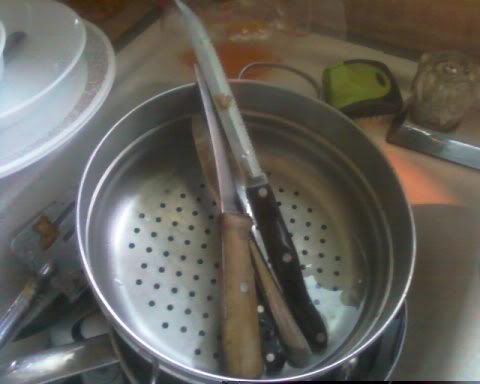
Isn't this a fun looking picture? Now imagine sticking your hand in this sink while your attention is diverted. Slashing your hand wide open is, generally speaking, a bad idea. And you're certainly going to lose your enthusiasm for cooking should this happen......which it shouldn't, because you're going to keep your kitchen clean right?